
Gutter Cleaning in Cascade, MI
{{custom_values.city3_h2_1}
}
Cascade is organised around the Thornapple River, and the river is not decoration here. Cascade Charter Township owns and maintains the Cascade Dam on the river just southwest of Cascade Road, and it publishes flood-zone guidance for residents living along the water, which tells you how seriously the corridor is taken locally. For gutter work, riverside property means two things. The tree cover along the river runs to mature hardwood and generates a leaf load well above what an open subdivision produces. And on ground that already sits close to the water table, roof discharge dumped near the foundation has nowhere useful to go. Administratively, Cascade is not an incorporated city. It is an unincorporated community within a charter township, so there is no city building department and permits route through Cascade Charter Township. We sort out which office is involved before scheduling anything that needs review.
Township Permitting, No City Hall
The housing here skews toward larger homes on larger, wooded lots, and roof area is what changes the job. A big house with several roof planes sheds considerably more water than its street frontage suggests, and the original system was frequently sized by habit rather than by measurement. That shows up as a trough that copes with ordinary rain and overflows in a serious one, usually at the same corner every time. We measure each plane rather than estimating from the ground. The setting also affects access. Long approaches, mature trees close to the house, and rooflines with multiple levels mean ladder setup takes longer here than on a compact suburban lot, and we would rather account for that honestly in the scope than discover it on the morning. That applies most on the wooded lots between Cascade Road and the Thornapple River, where the approach alone adds time before a ladder is set.
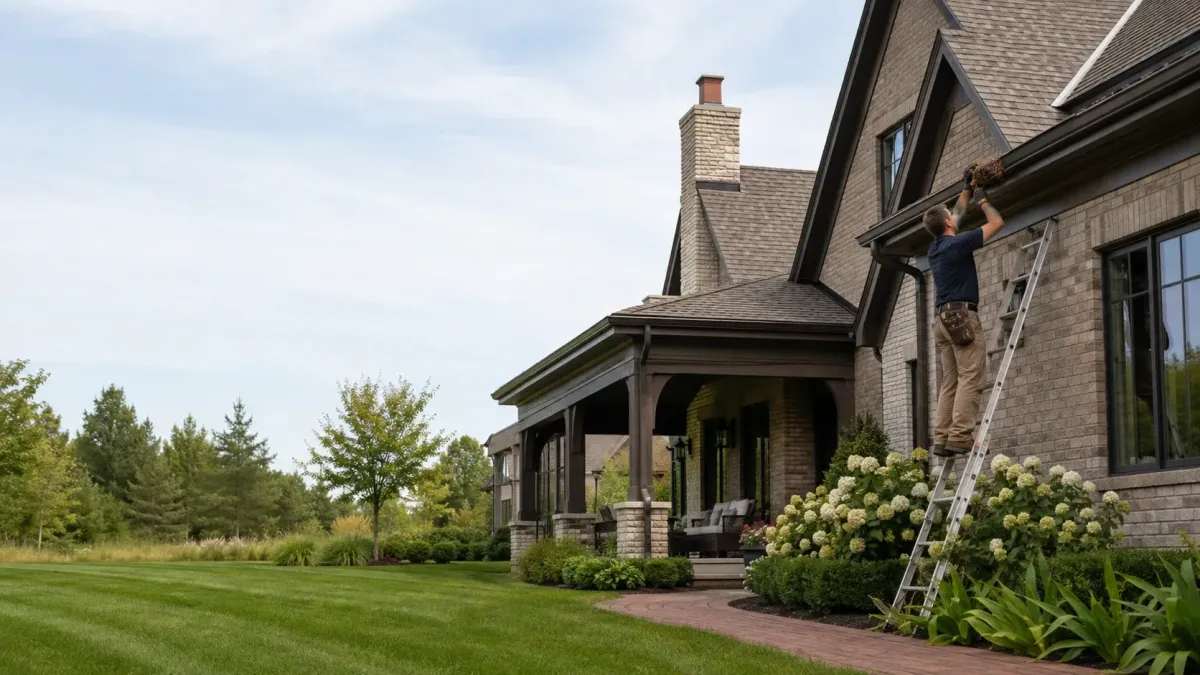
Riverside Properties and Runoff
Repair work along the Thornapple River corridor turns up rot more often than elsewhere, and the reason is the combination of heavy hardwood leaf load and consistently higher humidity near the water. A trough that overflows under mature trees feeds the fascia behind it, and near the river that board dries more slowly than it would on an open lot. So a sagging run on Thornapple River Drive is a different diagnosis than the same symptom in a newer subdivision, and we probe rather than assume. The other repair we see regularly here is a run that has been overwhelmed rather than damaged, where a large roof plane simply pushes more water than the trough was built to carry. That is not fixed by resealing anything, and we will say so.
Working With Cascade Charter Township
Replacement in Cascade is a sizing exercise first. The larger homes on wooded lots here routinely have roof planes that were never matched to the trough and outlets serving them, so we measure each plane and let the result decide the profile and the downspout count rather than replicating what was there. Near the Thornapple River we also plan discharge deliberately, because on ground that sits close to the water table an outlet ending beside the foundation is a problem the trough cannot solve. Where the property allows, that means carrying discharge well clear of the house. Fascia gets probed before anything new is hung, since finding soft board after the old system is down is what turns a one-day install into a much longer week. On the lots running back from Cascade Road that week stretches further still, because setup is slower than the footage suggests.
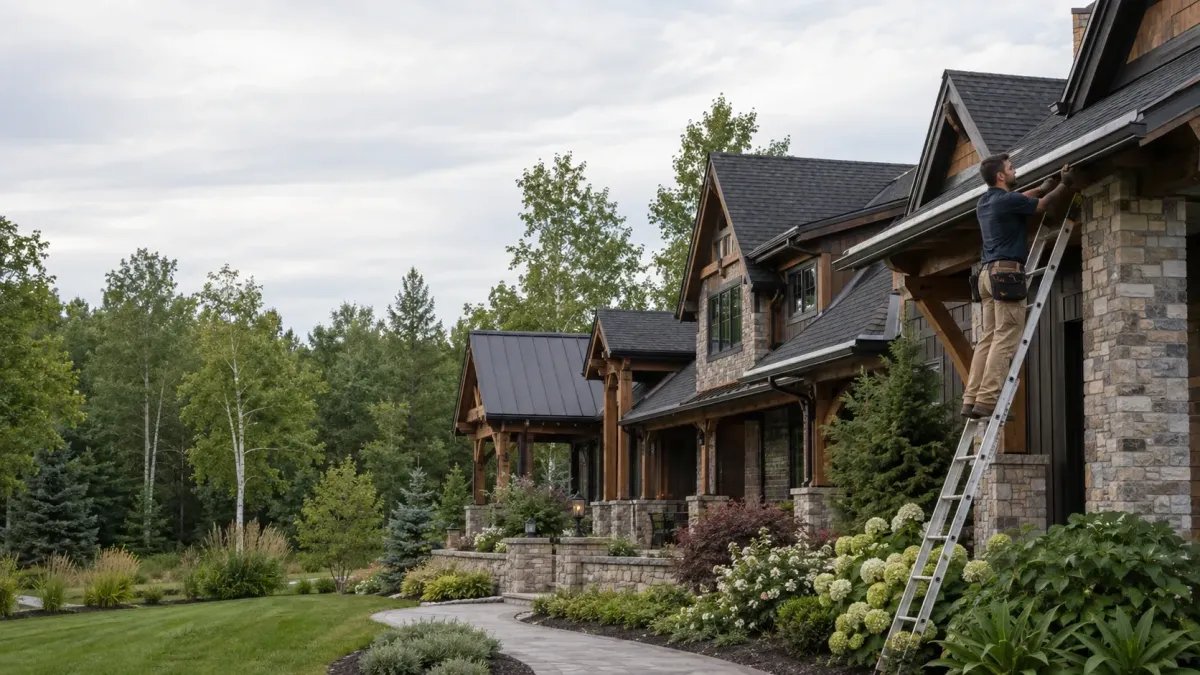
Sizing for Bigger Roof Planes
Cleaning in Cascade is driven by the hardwood canopy, particularly on the lots running back from the Thornapple River. Those trees drop over a long window and generate more material per foot of trough than almost anything else in the ring, so twice a year is a starting point and three visits is common on genuinely wooded property. We time the last visit late, after the drop has actually finished, because a trough that goes into a freeze packed is a trough that holds ice through to spring. Access is worth flagging on these properties: mature trees close to the house and multiple roof levels make setup slower, which we account for in the quote rather than discovering it on the day. Properties along the Thornapple River Drive corridor are the clearest case, with mature hardwood sitting directly over multi-level roofs.
Gutters only, in Kentwood and the townships around it
Proudly serving Kentwood, East Grand Rapids, Cutlerville, Cascade, Caledonia and Forest Hills for years.
Comprehensive Gutter Services Services in Kentwood
Tailored to Your Needs
Ten services, and they are not variations on one job. Clearing a trough, rehanging a run that has pulled off the fascia, and putting in a new seamless system are separate scopes with separate prices. Start with the one that matches what you are seeing.
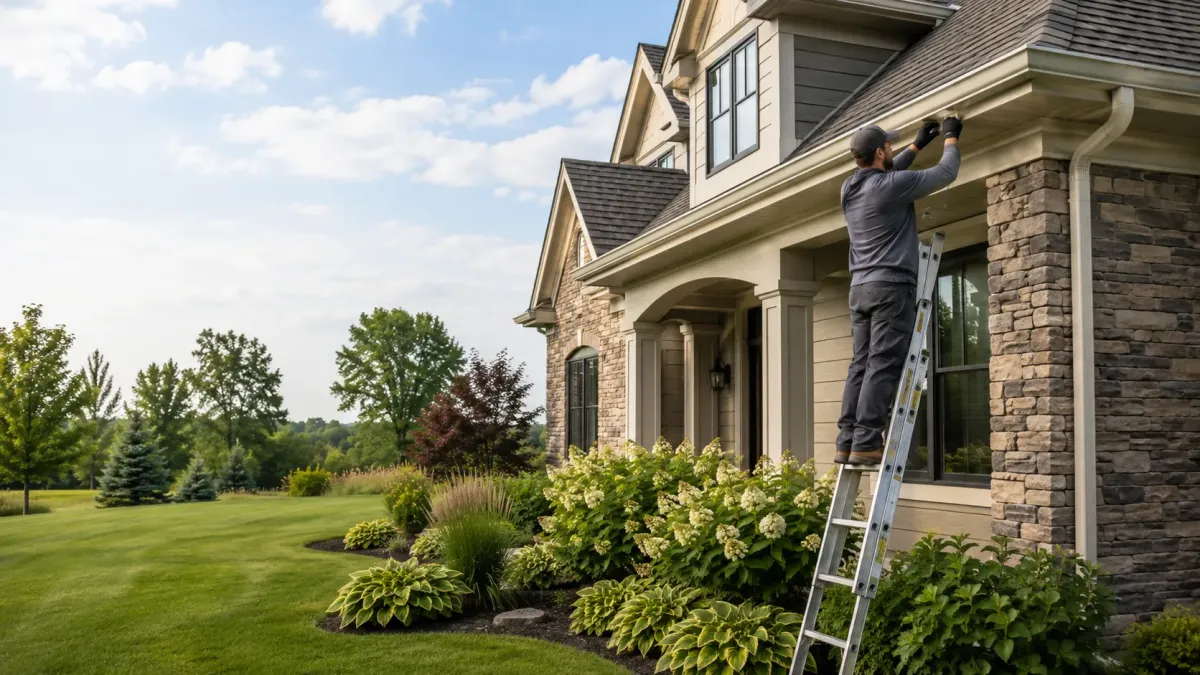
A repair addresses failures local to one run rather than a system that is finished.
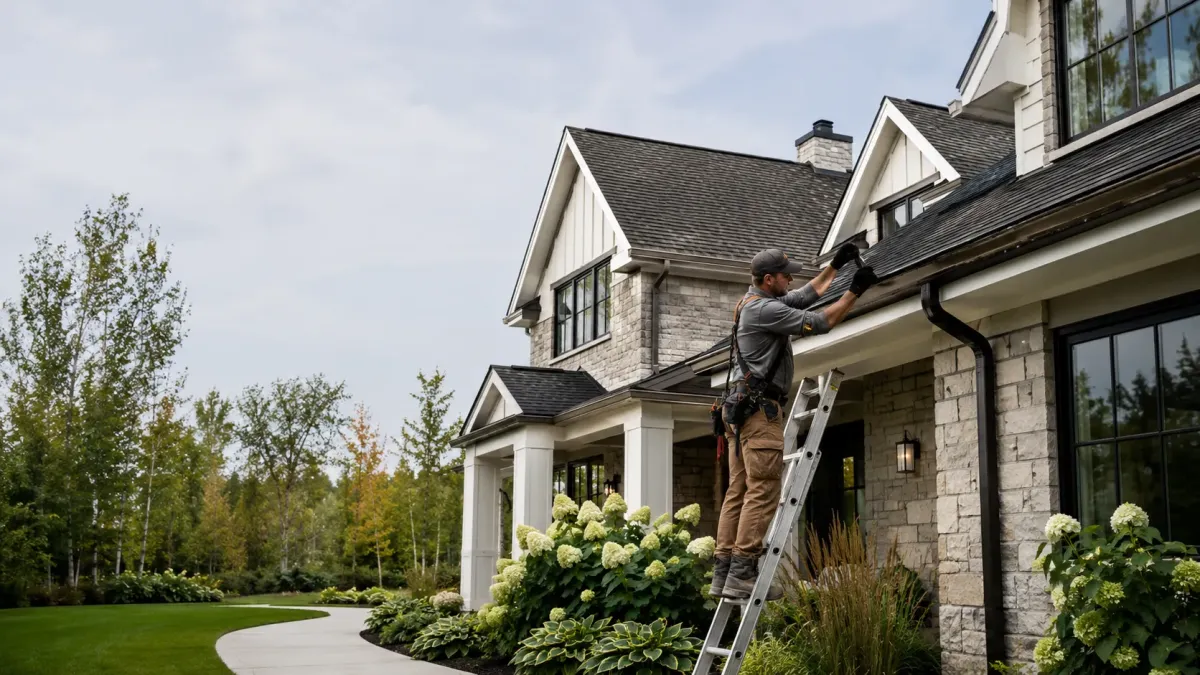
Replacement is warranted when failures repeat across elevations rather than at one point.
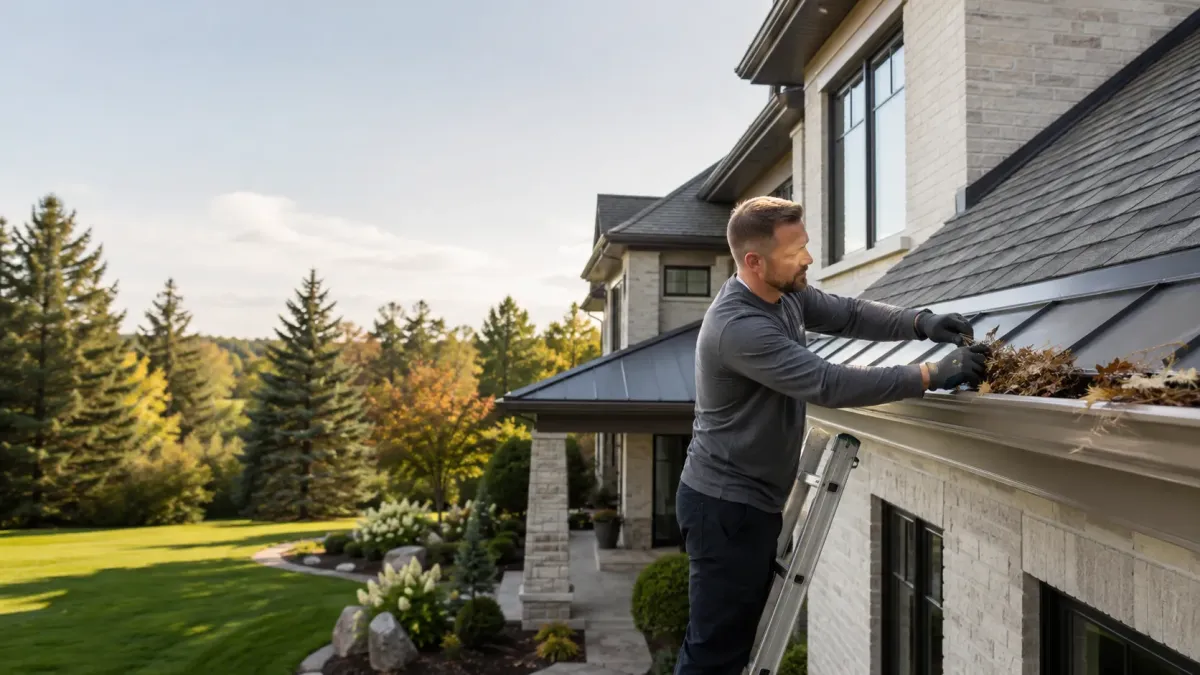
Cleaning clears the trough, flushes the downspouts, and confirms the water actually leaves.
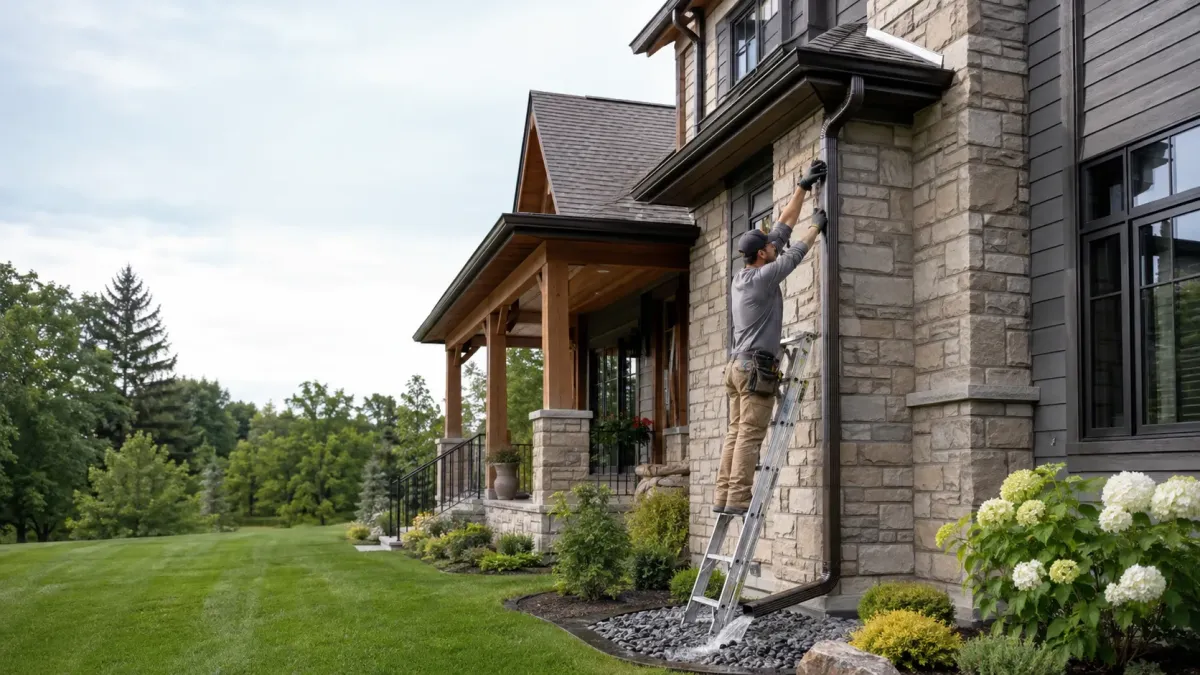
Downspout work decides where roof water ends up once it leaves the trough.
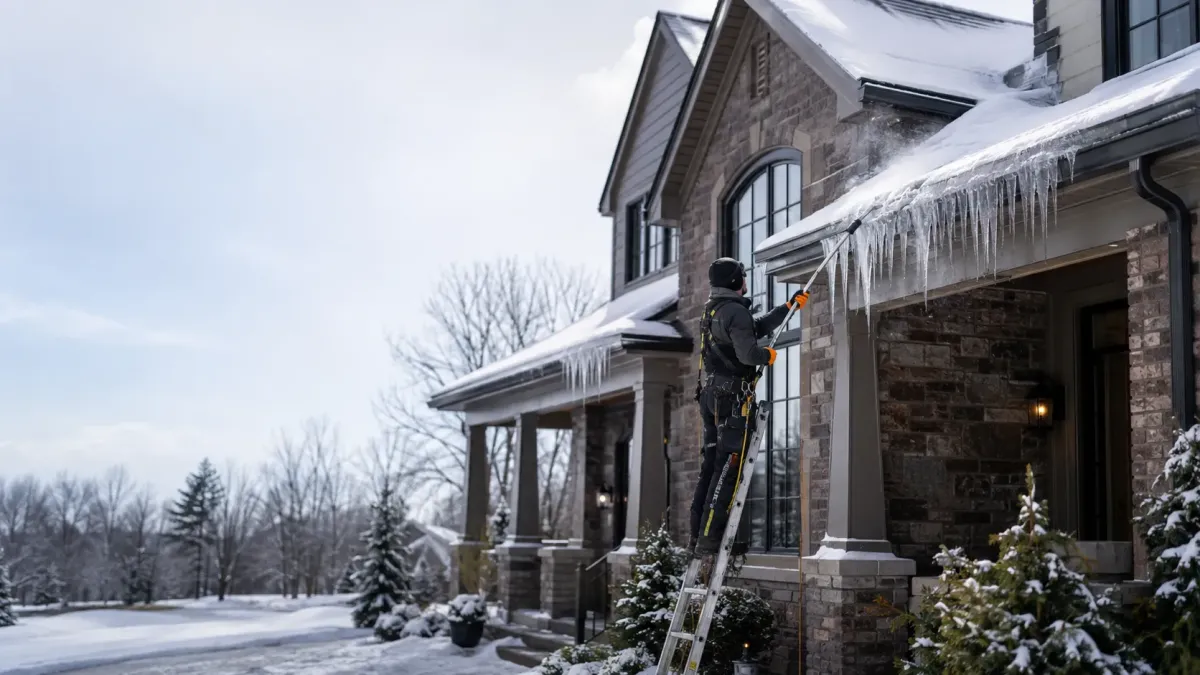
Ice dams form when meltwater refreezes at a cold eave and backs up under shingles.
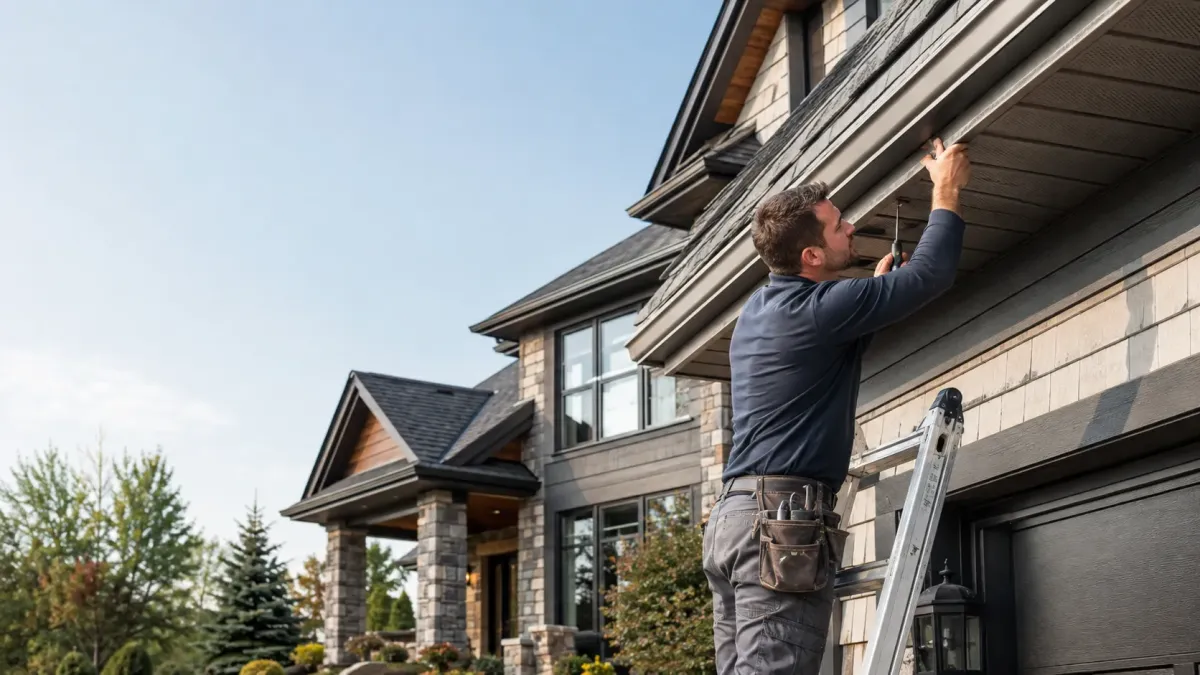
Fascia carries the hangers, so its condition decides whether new gutters will hold.
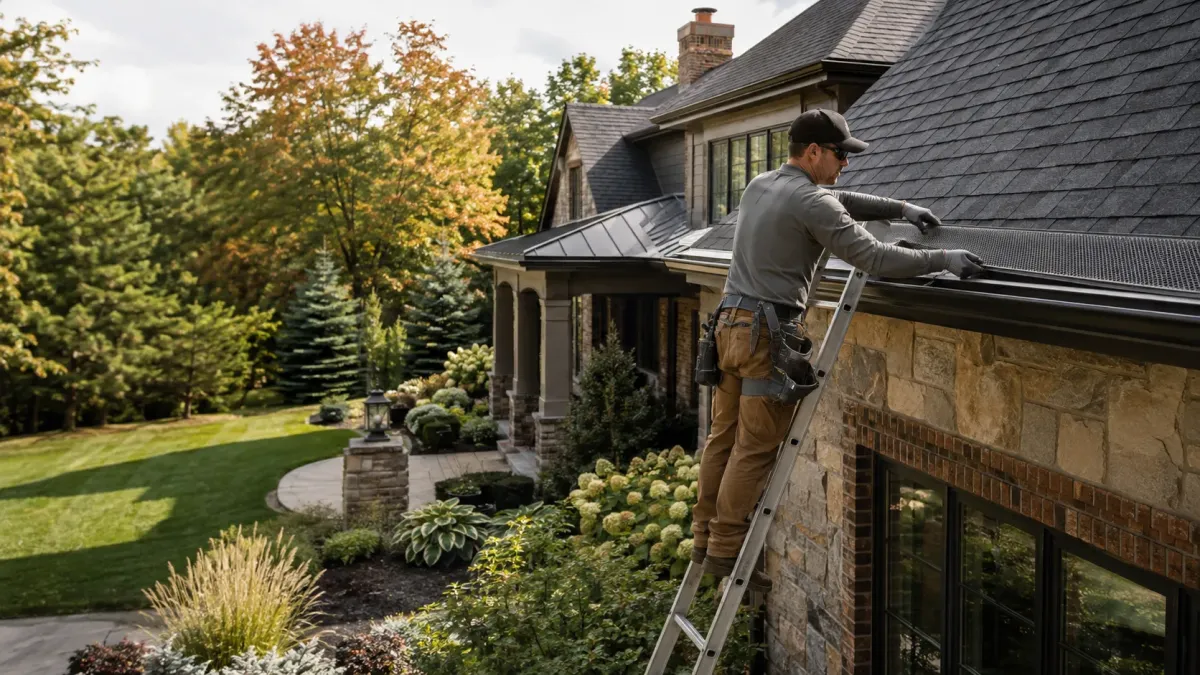
Guards reduce how often a trough needs clearing rather than eliminating the need.
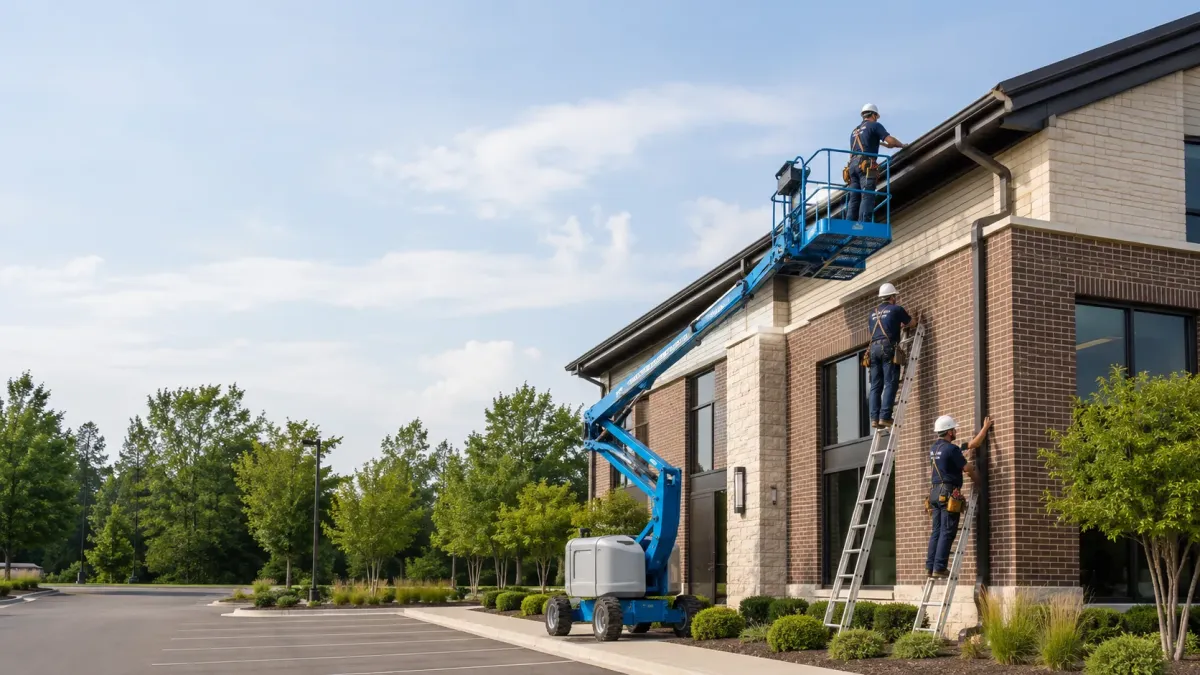
Commercial roofs drain more water through fewer outlets, so sizing governs everything.
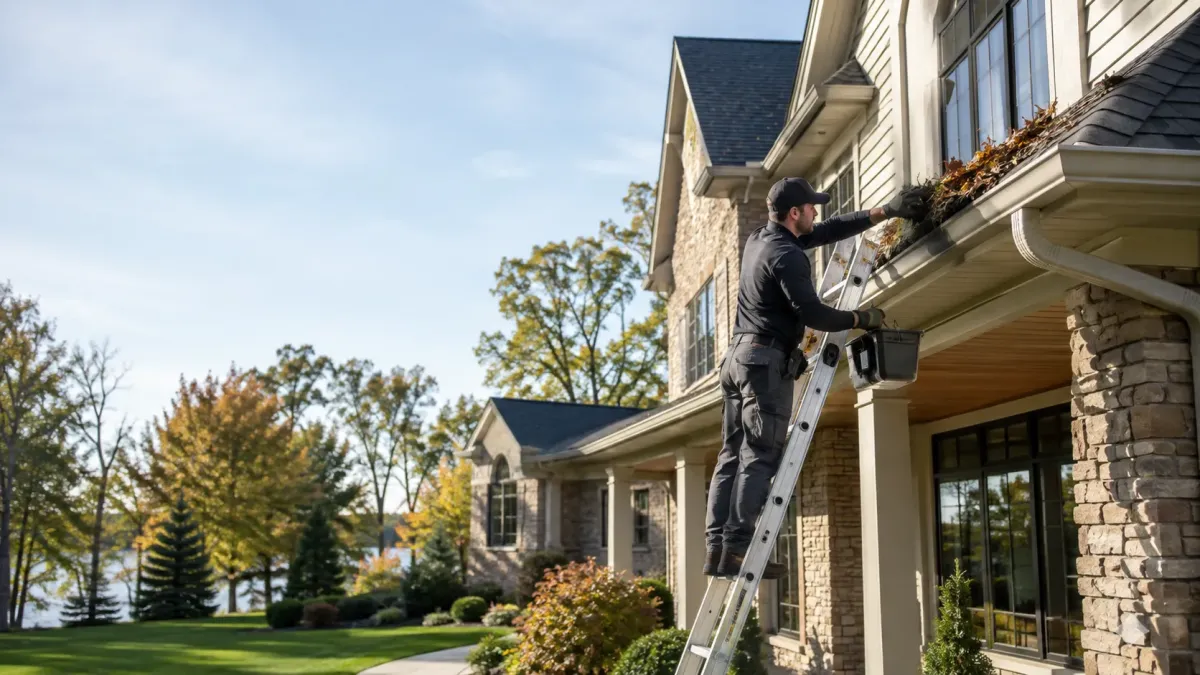
Eavestrough cleaning is gutter clearing under the name many locals still use.
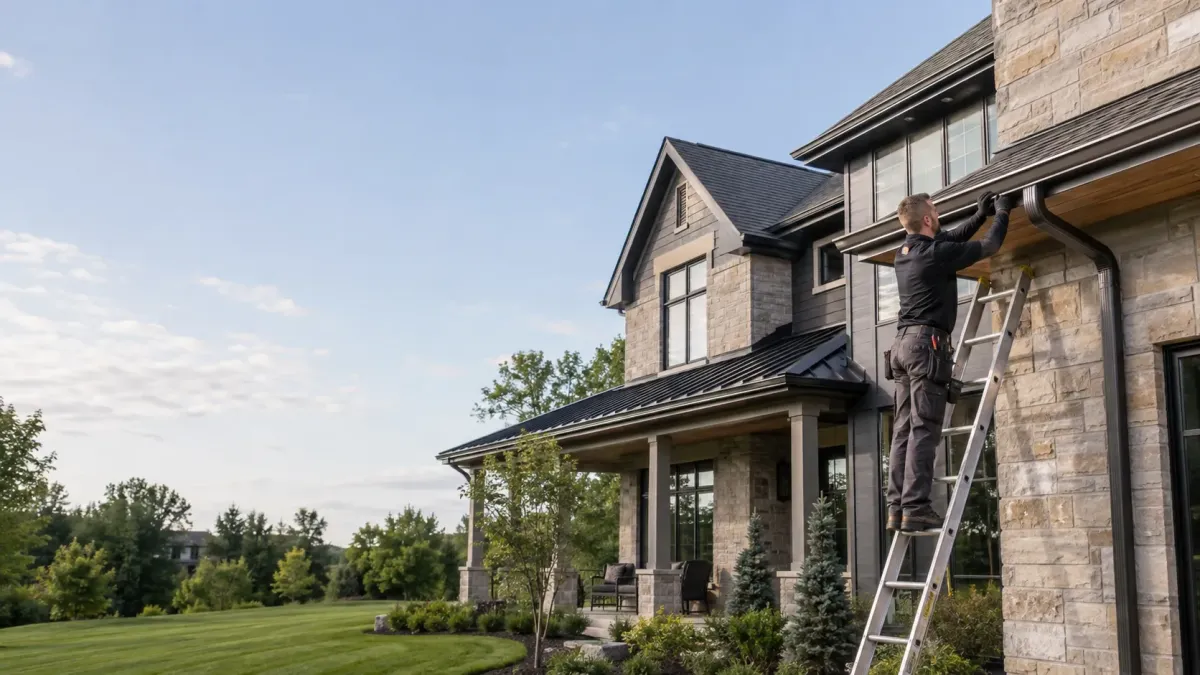
Seamless runs are formed on site to the exact length of each elevation.
Frequently Asked Questions
Gutter Services can be complex, and we’re here to provide answers to common questions. Here are some frequently asked questions from our clients.
Frequently Asked Questions about gutter cleaning kentwood mi
How much does gutter cleaning cost in Kentwood, MI?
There is no single price, and anyone quoting one sight unseen is guessing at your roof. Cost follows the linear footage of trough, how many stories the ladder has to reach, how much debris is actually in there, and whether guards have to come off and go back on first. We look at the roof, then give you the number.
When should I clean my gutters in Michigan?
Plan on twice a year for most homes here, once after the spring seed and blossom drop and once late in the fall after the last leaves are down. Under heavy oak or maple you will want a third visit, because oak holds its leaves long past the point most people have put the ladder away. The fall clearing is the one that matters most, since a packed trough going into a Michigan winter is how ice damming starts.
Are gutters required by code in Michigan?
There is no single answer that covers every address in this area. What is consistent is that roof water has to be carried away from the foundation, and how that gets achieved depends on grade, soil and the age of the house. We would rather look at where your water is actually going than argue about whether a code section applies.
Does Michigan require a permit for gutter installation?
It depends on the scope and on who covers your address. Routine cleaning and a straightforward repair are one thing. Replacing fascia, altering the roof edge, or reworking where water discharges can be another. Kentwood is a city with its own building office, while Cutlerville, Cascade, Caledonia and the Forest Hills area route through township offices, so we confirm with the right one before we schedule work that needs it.
How do I know if I need new gutters or just repairs?
Look at how the failure is distributed. One sagging run, a couple of loose brackets, or a single leaking seam is a repair, and a good one will hold for years. Separated seams in several places, trough that has pulled away along an entire elevation, or rust and pinholing across multiple runs means you are paying to patch a system that is finished. We tell you which one you have before we quote.
What is eavestrough cleaning and how often should I do it?
Eavestrough is the older regional word for the same trough that runs along your roof edge, and plenty of people here still use it. The cleaning is identical work under either name: clear the trough, flush the downspouts, and check that water actually leaves the far end. Same schedule too, twice a year for most homes and three times under heavy tree cover.
Still Have Questions About gutter cleaning kentwood mi?
Speak With a Trusted Gutter Services Expert Today.
What Our Satisfied Clients Have to Say About
We pride ourselves on delivering great results and experiences for each client. Hear directly from home and business owners who’ve trusted us with their Gutter Services needs.
The Trusted Gutter Services Expert Near You
Ready to hear more about expert services at ?
Contact us today to receive a detailed, no-obligation quote.


